

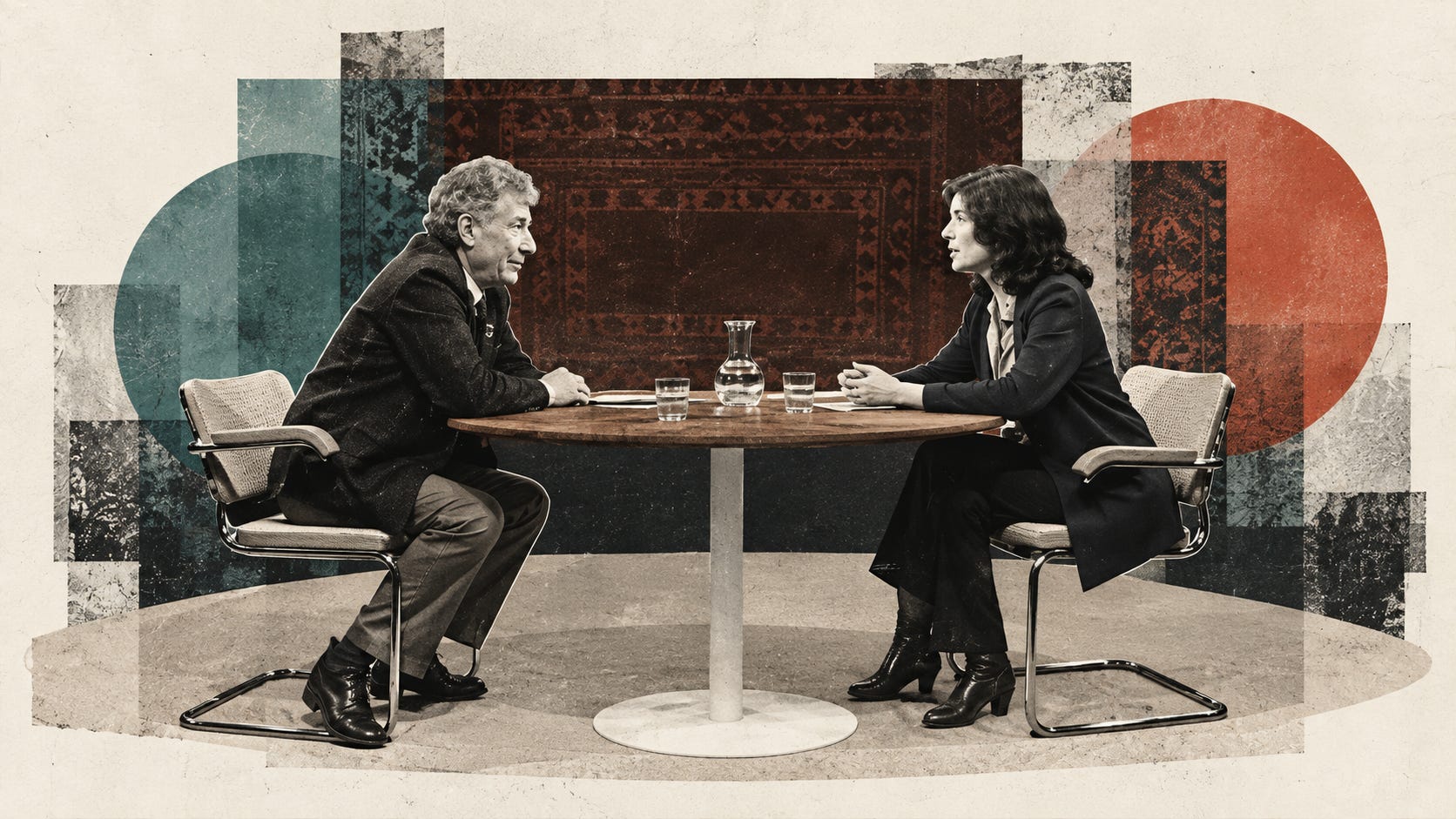
In a 1983 conversation for Channel 4’s Voices, John Berger told Susan Sontag about a shepherd whose life he had wanted to keep in a story. He began with what he knew of the man. Sontag cut in: “And then you started inventing.” Berger agreed, and held that the invention stayed tied to the truth of that life. The exchange appears in To Tell a Story, the collection of their conversations and letters that Canongate published this year, in Berger’s centenary year. Elsewhere in the same conversation Sontag says storytelling faces toward truth and toward invention and lies at once. She let both directions stand.
People who talk about artificial intelligence usually pull those directions apart. When a model invents a fact, we call it a hallucination. When it invents a plot or a character we like, we call it creativity. Both come from the same machinery. A language model generates text piece by piece from patterns learned in training and from the context it is given, and that process can produce an invented court opinion as readily as an invented ghost. In a single afternoon, a strategy team may ask the same model for a provocation to open a workshop and for figures to put in a client deck. The difference sits in the request. A ghost story asks the reader to enjoy it, and a legal citation asks the reader to rely on it.
