

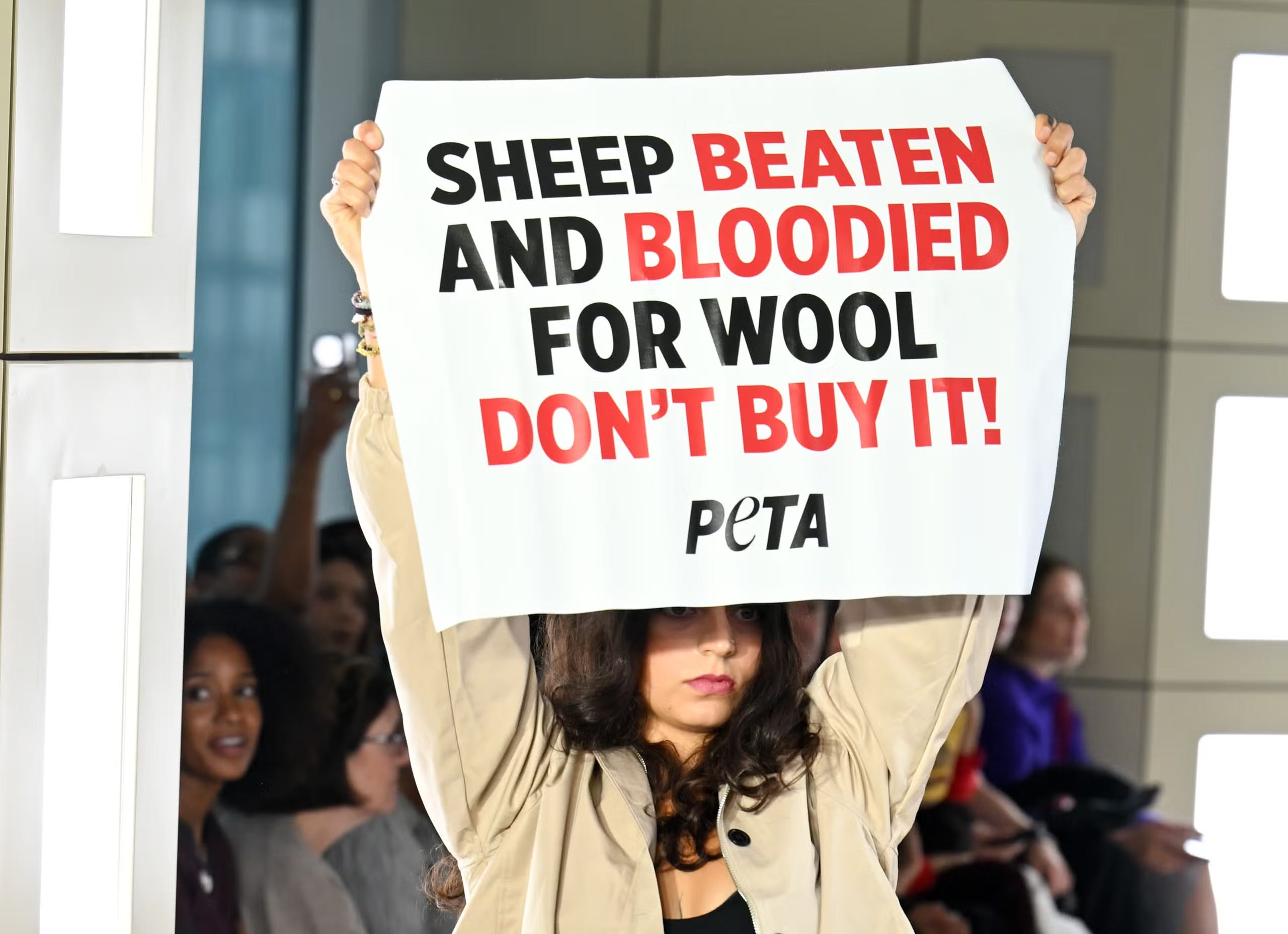
A wool protest reached a New York runway this month. The campaign asks a brand to remove a material (wool), while the brand answers with a certificate. Both positions treat fiber as the place where a garment’s ethics get settled. But certification does not establish that a sheep was unharmed. It establishes that a farm passed an audit, and the label lets procedural compliance stand in for continuous practice. That distinction surfaced in May, when campaign footage from a South African farm certified under both NATIVA and the Responsible Wool Standard showed workers kicking and dragging sheep. Textile Exchange suspended the farm after a third-party body confirmed a critical nonconformity. The failure did not expose a broken standard so much as the limit of what standards can verify. They certify conditions at intervals, not conduct at every moment. The Responsible Wool Standard also covers only 4.3 percent of global wool production, while wool, mohair, cashmere, and alpaca together make up less than one percent of all fiber produced. The protest and the certification defense fight over the ethics of a category too small to explain the industry’s larger material impact.
